
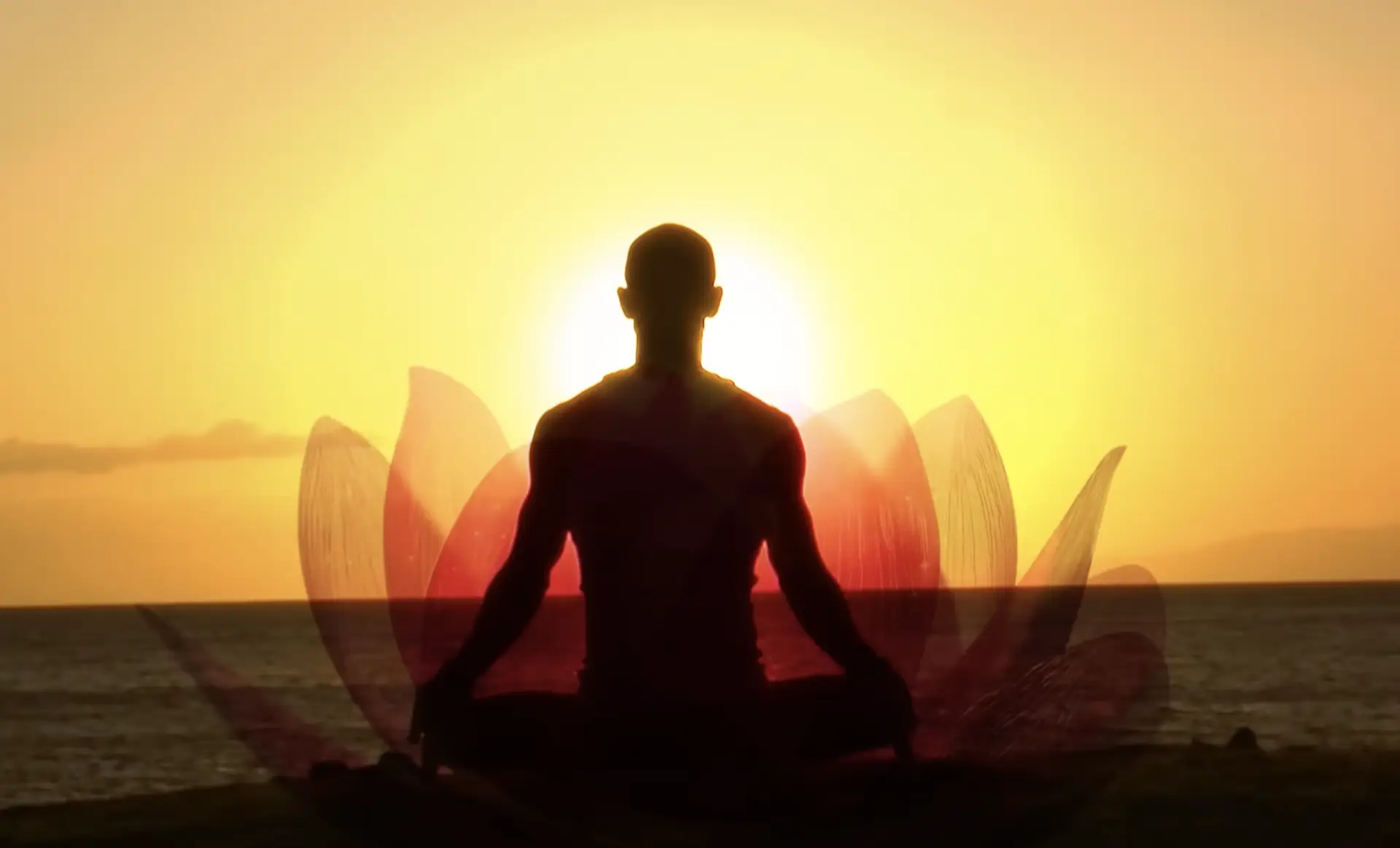
Има филми, които гледаш, харесваш и забравяш. Има и такива, които сякаш тихо влизат под кожата ти, оставят следа и започват да работят дълго след финалните надписи. За мен “Samadhi” е точно такъв филм.
There are films you watch, enjoy, and forget. And there are others that quietly get under your skin, leave a mark, and continue to work within you long after the final credits. For me, “Samadhi” is exactly that kind of film.
The word samadhi comes from Eastern spiritual traditions and is often translated as a state of deep meditative awareness, unity, and liberation from the illusion of a separate “self.” The film uses this concept as a starting point to explore a much bigger question: who are we beyond our thoughts, roles, and stories?
One of the central themes in “Samadhi” is the theme of the ego — not as something “bad,” but as a mechanism we have created in order to navigate the world. The film raises provocative questions: could what we call the “self” be nothing more than a collection of memories and beliefs? To what extent is our identity real rather than socially constructed? Are we living our lives consciously, or are we simply acting out learned scripts?
At a certain point, you realize that most of the time we are not the ones thinking our thoughts — our thoughts are thinking us. And this realization can be both frightening and incredibly liberating.
“Samadhi” is not a religious film, even though it draws from Eastern philosophies. It is, rather, an invitation to an inner revolution — a revolution not against the system outside of us, but against the automatic mode within us. The film gently yet persistently reminds us that we are not our labels, not our professions, not the stories of our past, not our fears and traumas. And that somewhere beyond all of this, there is something much quieter, deeper, and more real.
Visually and emotionally, the film is exceptionally beautiful — slow, contemplative, at times even hypnotic. It does not rush to explain, does not try to convince, and does not impose truths. Instead, it creates a space, almost meditative, in which you can arrive at your own realizations. As I watched it, I had the feeling that I was not simply absorbing information, but experiencing something more like an inner dialogue with myself.
“Samadhi” is not a film for everyone. If you are searching for quick solutions, simple methods, or inspirational clichés, it is unlikely to resonate with you. However, if you are drawn to meditation and mindfulness, if you find yourself reflecting on questions of meaning and identity, if you sense that there is more beyond the constant background noise of daily life, or if you simply wish to see your life from a fresh angle — then this film could become a deeply powerful experience.
While watching it, I realized how often I live on autopilot — reacting, rushing, thinking, analyzing, worrying. And how rarely I simply am. The film reminded me that awareness is not some abstract spiritual goal, but something very human and accessible — the ability to be present in the moment without running away from it.
After it ended, I remained in silence. I felt the need not to rush on to the next thing, but simply to sit for a while with everything that had been opened up inside me.
If you choose to watch “Samadhi,” I suggest taking your time with it — setting your phone aside, letting go of the need for fast answers, maybe sitting down with a cup of tea and an open heart. This is not a film to be consumed. It is a film to be lived. And at times, a film that can gently transform the way you see yourself and the world around you.
If you’ve already watched it, I would love to hear: what touched you the most? I’m getting ready for the next part!