
In the modern world, many of us live in a state of constant busyness, tension, and rushing. Our bodies rarely get the chance to truly rest. At the heart of this lies the way our autonomic nervous system functions.
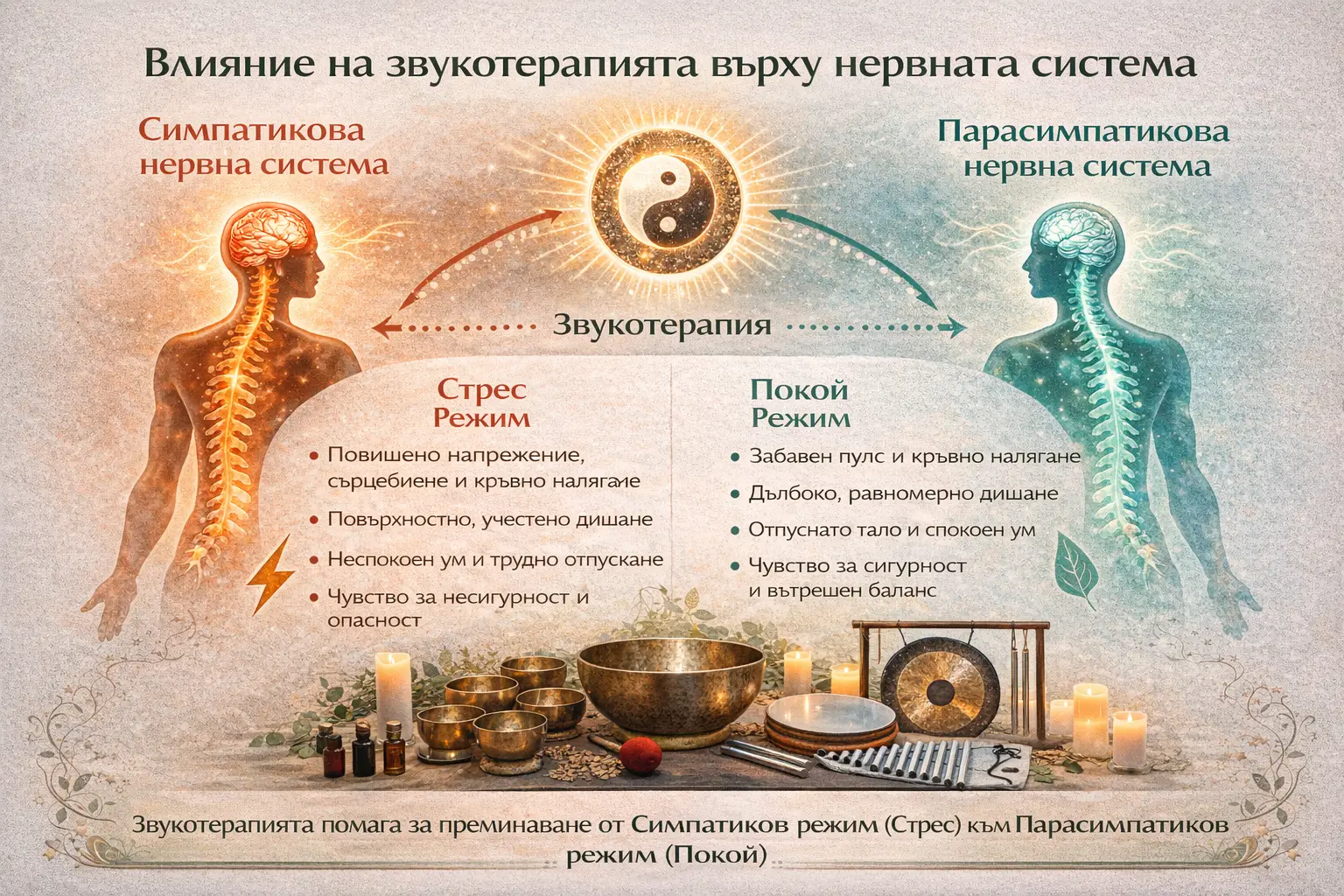
It has two main modes — sympathetic and parasympathetic.
The sympathetic nervous system is associated with the “fight, flight, or freeze” response. It becomes active during stress, anxiety, tension, and overload. In this mode, the heart rate increases, breathing becomes shallow, muscles tense, and the mind remains constantly alert. This is useful in short-term situations, but when it continues for too long, it leads to exhaustion, burnout, and chronic fatigue.
The parasympathetic nervous system, in turn, is responsible for the “rest and recovery” mode. When it is active, the heart rate slows down, breathing becomes deep and calm, the body relaxes, and the mind finds clarity and balance. It is in this state that true recovery happens — physical, emotional, and mental.
The problem for many people today is that they spend most of their time in sympathetic mode and only rarely reach a state of deep parasympathetic rest.
This is where sound therapy comes in.
Sound is one of the most direct forms of influence on the nervous system. It is perceived not only through the ears but through the entire body — via vibrations, tissues, bones, and internal organs. Certain frequencies, rhythms, and tones directly affect brain waves, breathing, and heart rate.
During a sound meditation with gongs, Tibetan and crystal bowls, and subtle instruments, the body gradually shifts from a state of tension to a state of rest. The brain begins to produce alpha and theta waves, which are characteristic of deep relaxation, meditation, and sleep.
Rhythmic, gentle, and enveloping sounds activate the parasympathetic nervous system and send a signal of safety to the body: “You are safe here. You can relax.”
In a well-guided sound therapy session, this process is not abrupt. Participants are prepared gradually — through subtle instruments, breathing, and a careful entry into the sound space. This allows the nervous system to regulate itself naturally, without force and without resistance.
Regular sound therapy practice can support:
– reducing stress and anxiety
– improving sleep
– recovery from burnout
– balancing emotions
– increasing concentration
– a sense of inner stability
Sound therapy is not an escape from reality, but a return to the body and its natural intelligence. It helps us restore our connection with ourselves and create inner space for rest, clarity, and awareness.
In a world that constantly pulls us outward, sound brings us back inward.
Back to the breath.
Back to the body.
Back to the silence behind the noise.